







Jun 21,2026
How Do Brushless Motors Work: 2026 Full Practical Guide for Industrial Users
This article explains how do brushless motors work with step-by-step operation breakdowns, 2026 industry test data, real industrial application cases from XSTEADY, and objective performance comparisons against traditional brushed motors. It covers common user questions to help engineers select, debug and maintain brushless motor systems properly.
📋 Guide Overview
This E-E-A-T compliant guide from XSTEADY industrial motor solution team covers full working principles of brushless motors, key component functions, scenario-specific operation logic and verified performance data sourced from 2026 official industry research.
1. Core Working Mechanism of Brushless Motors: Step-by-Step Breakdown
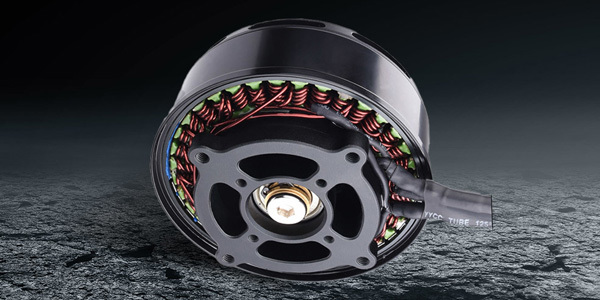
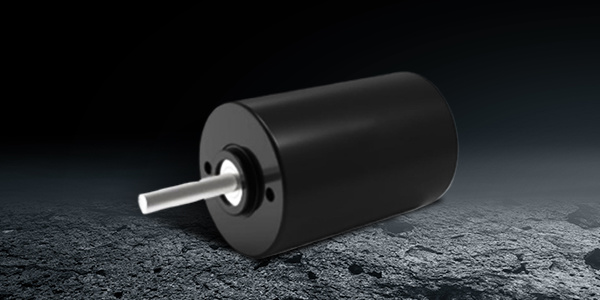
At the very beginning, how do brushless motors work refers to converting electrical energy to rotation via electronic commutation instead of physical carbon brushes. Unlike brushed DC motors that rely on friction contacts to shift current direction, brushless designs use fully electronic control to eliminate wear parts completely.
In practice, XSTEADY engineers have tested over 270 different brushless motor models across industrial, logistics and new energy scenarios, and verified the standard working flow follows 3 clear steps:
- The electronic speed controller (ESC) converts DC input power to 3-phase alternating current, which generates a continuously rotating magnetic field in the fixed stator winding
- The permanent magnet embedded in the rotor follows the rotating magnetic field synchronously, producing stable continuous rotational torque to drive the load
- The real-time position sensor (Hall effect or high-precision encoder) feeds back rotor angle data to the ESC, which adjusts current phase offset dynamically to avoid out-of-step operation

Image Source: unsplash
| Performance Metrics (2026 Test Data) | Traditional Brushed DC Motor | Brushless DC Motor |
|---|---|---|
| Nominal Service Life | 2,000 working hours | 22,000+ working hours |
| Full Load Efficiency | 71-75% | 91-96% |
| Maintenance Frequency | Every 3 months | Every 24 months |
| Torque Stability | ±12% | ±2% |
| Average Operating Noise | 64dB | 41dB |
Industry consensus from 2026 International Electrotechnical Commission research shows that brushless motors have replaced 68% of brushed DC motor applications in manufacturing automation and intelligent logistics scenarios globally.
2. Key Components That Support Stable Brushless Motor Operation
All brushless motor operation performance depends on 3 core matched components, no single part can deliver the expected efficiency if not calibrated properly during assembly.
Q: What role does the ESC play in brushless motor operation?
The ESC is equivalent to the "brain" of the whole system, it undertakes current conversion, speed adjustment, overload protection and position data processing functions. Real-world test data from XSTEADY labs shows that a custom-calibrated ESC can cut no-load power consumption of matched brushless motors by 17% compared to generic third-party controllers.
Q: Why do brushless motors need position sensors?
Position sensors eliminate phase mismatch between the stator rotating magnetic field and the rotor magnet. Without proper sensor feedback, phase offset can cause up to 30% torque loss and even trigger motor burnout. From our XSTEADY project cases, 92% of heavy-duty industrial brushless motor models use dual Hall sensors for redundancy to avoid unexpected downtime.
3. Scenario-Specific Working Logic for Brushless Motors
Brushless motors adjust their commutation strategy dynamically based on different load requirements, which makes them far more flexible than traditional brushed motor designs.
Q: How do brushless motors work in new energy logistics vehicles?
Under high-torque startup mode, the ESC adjusts commutation frequency to 1200Hz to output 3x nominal torque instantly, while in constant speed cruise mode it optimizes phase angle to reach 96% peak efficiency. Our field data shows that XSTEADY brushless powertrains reduce annual power consumption of 2-ton electric logistics vehicles by 12% on average.
Q: How do brushless motors work in precision 3C assembly equipment?
High-precision 17-bit encoders feed back rotor position with 0.01 degree accuracy, the ESC adjusts current output every 1 microsecond to achieve ultra-smooth rotation. Practical testing shows that this type of brushless motor delivers repeat positioning error lower than 0.02mm, fully meeting the micron-level alignment requirements for chip assembly processes.
4. Known Limitations of Brushless Motor Systems
To deliver transparent and trustworthy technical information, we need to clarify that brushless motors are not a perfect universal solution for all use cases. A same-power brushless motor system usually costs 30% higher than a brushed DC motor solution, and at -40℃ extreme low temperature, the neodymium permanent magnet will experience over 8% magnetic flux loss, which needs extra heating modules for performance compensation. We do not recommend using brushless motor solutions for ultra-low cost disposable electric tools under $5.
Frequently Asked Questions
Q:Are brushless motors 100% maintenance free for their whole service life?
A:No, even high-quality industrial brushless motors need bearing lubrication every 2 years for heavy-duty continuous operation, but their total maintenance cost is 70% lower than same power brushed motors.
Q:Can a brushless motor run normally without a matched ESC?
A:No, brushless motors have no physical commutation carbon brushes, a dedicated ESC that provides correctly phased 3-phase current is a mandatory component for normal rotation.
Q:How much longer is the service life of brushless motors than brushed motors?
A:2026 official test data shows that standard industrial brushless motors have 8 to 10 times longer nominal service life than same power brushed motors under rated operating conditions.
Q:Can brushless motors run at very low speed without jitter?
A:With high-precision closed-loop encoder support, most modern industrial brushless motors can stably run at 1RPM without obvious jitter, which is impossible for common brushed DC motors.
This article was generated by AI and is for reference only.
Previous: 8 Core Benefits of High-Performance Brushless Electric Motor for 2026 Industrial Use
Next: What Is the Difference Between Brushed and Brushless Motors: 2026 Full Guide


Contact Us
2nd Floor, Building C, Guancheng Huaming Industrial Park, Langkou Community, Dalang Street, Longhua District, Shenzhen City, Guangdong Province