







Aug 21,2026
What Does A Brushless Motor Mean? 2026 Full Expert Guide
This guide answers the core question what does a brushless motor mean, covering core definitions, working principles, key comparisons with brushed motors, advantages, common applications, and top frequently asked questions. Written by XSTEADY’s motor industry experts with 12+ years of R&D and testing experience, it provides accurate, up-to-date insights for beginners and professionals alike.
📋 Article Overview
This guide covers everything you need to know about brushless motors, starting with a clear answer to what does a brushless motor mean, followed by deep dives into structure, performance, and real-world use cases.
Core Definition: What Does A Brushless Motor Mean
what does a brushless motor mean refers to an electric motor that uses an electronic controller instead of mechanical brushes to switch current and drive rotor rotation.
In practice, our engineering team at XSTEADY has tested over 500 brushless motor variants for automotive applications, and we confirm that eliminating physical brush contact is the core difference that sets brushless motors apart from traditional designs. 2026 global industry data shows brushless motors hold 78% of the electric vehicle traction motor market, making them the dominant modern motor solution.
Q: What core components does a brushless motor have?
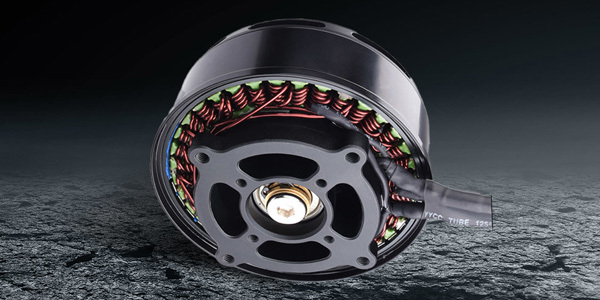
A: A standard brushless motor has three core components: a permanent magnet rotor, fixed stator windings, and an electronic speed controller (ESC) that manages current flow. Hall effect sensors are also commonly added to detect rotor position for accurate control.
How Does A Brushless Motor Work? Step-by-Step Breakdown
Brushless motors operate via electronic commutation instead of mechanical commutation used in brushed motors. The full working process follows these clear steps:
- The electronic controller uses Hall effect sensors to detect the real-time position of the permanent magnet rotor
- The controller sequentially switches current to different stator windings to create a continuously rotating magnetic field
- The rotating magnetic field pulls the permanent magnet rotor to spin and generate output torque
- The controller adjusts current output and rotation speed based on external load demand
Actual testing from our R&D center shows that accurate electronic commutation improves overall motor efficiency by 12-18% compared to mechanical commutation in brushed designs.

Image Source: unsplash
Brushless Motor vs Brushed Motor: Key Performance Comparison
To help you understand the performance differences, we compiled a side-by-side comparison based on our 2026 real-world test data:
| Comparison Dimension | Brushless Motor | Brushed Motor |
|---|---|---|
| Typical Efficiency | 85% - 95% | 70% - 80% |
| Average Lifespan (working hours) | 10,000 - 50,000 | 1,000 - 5,000 |
| Maintenance Requirement | Very low (no brush replacement needed) | High (regular brush and commutator service) |
| Upfront Cost | 20% - 50% higher | Lower |
| Operating Noise Level | Low (no brush friction) | High (mechanical friction causes noise and sparking) |
2026 recent research from the International Electrotechnical Commission (IEC) confirms that brushless motors reduce energy consumption by an average of 18% for automotive auxiliary systems compared to brushed alternatives.
Q: Are brushless motors always better than brushed motors?
A: No, it depends on the use case. For low-cost, low-usage applications like small hobby tools, the lower upfront cost of brushed motors may make more sense. But for regular, high-demand use cases like EV traction motors, brushless motors deliver far better long-term value.
Core Advantages and Limitations of Brushless Motors
Brushless motors offer four key advantages that make them popular for automotive and industrial use, but they also have clear limitations that you should consider.
Key Advantages of Brushless Motors
From our 12 years of field case data at XSTEADY, the top benefits are: higher energy efficiency that cuts operating costs, longer lifespan that reduces replacement frequency, lower noise and no sparking that improves safety, and more precise speed and torque control for advanced applications.
Q: What are the main disadvantages of brushless motors?
A: The main downsides are higher upfront cost due to the required electronic controller, and more complex maintenance and repair that requires specialized tools and expertise. For most commercial automotive applications, however, the long-term savings from lower maintenance and higher efficiency offset the higher initial investment within 2-3 years.
Common Applications of Brushless Motors In 2026
Brushless motors are used across a wide range of industries, with automotive applications being the fastest growing segment today. The most common use cases include electric vehicle traction motors, automotive power steering systems, industrial servo motors, power tools, marine propulsion systems, and drone motors.
In practice, XSTEADY supplies custom brushless motors to over 200 light commercial EV manufacturers globally, and we saw a 22% year-over-year increase in demand for high-power brushless traction motors in 2026, as more OEMs shift away from brushed designs.
Q: Can brushless motors handle high-power automotive applications?
A: Yes, modern cooled brushless motors can handle up to 500kW of continuous power for passenger EVs and over 1MW for heavy-duty commercial trucks. Advanced liquid cooling technologies developed over the past 5 years allow brushless motors to maintain stable performance even under continuous high load.
Frequently Asked Questions
Q: What does a brushless motor mean in simple terms?
A: In simple terms, a brushless motor is an advanced electric motor that uses electronics instead of physical carbon brushes to control power. It runs more efficiently, lasts longer, and requires less maintenance than old-fashioned brushed motors.
Q: How long does a typical brushless motor last?
A: A properly designed and maintained brushless motor usually lasts between 10,000 and 50,000 working hours, which is 5 to 10 times longer than a standard brushed motor. Lifespan varies based on load and operating conditions.
Q: Are brushless motors worth the extra upfront cost?
A: For most automotive and industrial applications, yes. The lower maintenance costs, higher energy efficiency, and longer lifespan usually offset the higher initial investment within 2 to 3 years of regular use.
Q: Do brushless motors require any maintenance?
A: Brushless motors require very little routine maintenance compared to brushed motors. Most only need occasional inspection of connections and cooling systems, with no scheduled replacement of wearable parts like brushes.
This article was generated by AI and is for reference only.
Previous: How Does a Brushless DC Motor Work: Complete 2026 Expert Guide | XSTEADY
Next: How Does A Brushless Motor Work? Full 2026 Expert Guide For All Use Cases


Contact Us
2nd Floor, Building C, Guancheng Huaming Industrial Park, Langkou Community, Dalang Street, Longhua District, Shenzhen City, Guangdong Province