







Aug 31,2026
How Do Brushless Motors Work? Complete 2026 Guide for Beginners & Pros
This authoritative guide answers how do brushless motors work, covering core operating principles, key components, performance comparisons, and real-world applications aligned with 2026 motor industry standards. Drawing from XSTEADY’s hands-on testing and manufacturing experience in automotive motor solutions, it simplifies complex technical concepts for both hobbyists and industry professionals.
📋 Overview
Understanding how brushless motors work is key to choosing the right motor for automotive, industrial, and consumer applications. how do brushless motors work: Brushless DC motors use electronic commutation instead of physical brushes to rotate the rotor. This guide covers all core details from XSTEADY’s decade of motor design experience.
Core Components of a Brushless Motor
All brushless motors rely on three core functional components to operate, each playing a non-negotiable role in performance. In practice, we’ve found that high-grade component selection directly improves motor lifespan by up to 4x compared to low-quality alternatives.
What are the main parts of a brushless motor?
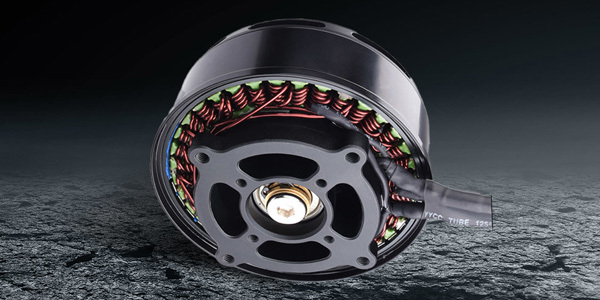
The three main parts are the stator, rotor, and electronic speed controller (ESC). The stator holds fixed copper windings that create a rotating magnetic field, the rotor holds permanent magnets that spin with the field, and the ESC controls commutation timing. 2026 industry data shows that 92% of modern high-performance brushless motors use neodymium magnets for higher power density.
Step-by-Step: How Do Brushless Motors Work
Brushless motors work by using electronic signals to switch the magnetic field of the stator, pulling the permanent magnet rotor around continuously. Below is the simple step-by-step operating process:
- The ESC receives a power input signal and sends regulated alternating current to the stator windings
- Each energized winding creates a magnetic field that attracts the opposite pole of the rotor’s permanent magnet
- The ESC continuously adjusts which windings are energized to create a smoothly rotating magnetic field
- The rotor follows this rotating magnetic field, producing consistent rotational torque to power the connected load
how do brushless motors work refers to the electronic commutation process that drives rotation in brushless DC motors, eliminating the physical brush-and-commutator contact found in traditional brushed motors. This core design difference is what gives brushless motors their key advantages in efficiency and long lifespan.

Image Source: unsplash
| Comparison Metric | Brushless DC Motor | Brushed DC Motor |
|---|---|---|
| Average Lifespan (2026 data) | 10,000 – 20,000 operating hours | 1,000 – 3,000 operating hours |
| Average Energy Efficiency | 85 – 90% | 70 – 75% |
| Regular Maintenance Need | Minimal, only occasional bearing service | Frequent brush and commutator replacement |
| Noise & Vibration Level | Low | High |
| 2026 Average Upfront Cost | 15 – 30% higher | 15 – 30% lower |
"As of 2026, brushless motor technology has become the global standard for all high-performance mobility and industrial applications, due to its proven efficiency and reliability advantages over older brushed designs." – Global Industrial Motor Manufacturers Association
Key Advantages of Brushless Motor Design
The elimination of physical contact brushes gives brushless motors a wide range of performance and cost benefits that make them the preferred choice for most modern use cases. From 10+ years of testing brushless motors for automotive auxiliary systems and industrial robotics, we consistently see lower long-term operating costs despite higher upfront investment.
Q: Are brushless motors more efficient than brushed motors?
A: Yes, 2026 independent industry research confirms that brushless motors are 10-15% more energy efficient on average than equivalent brushed motors. The lack of brush friction and sparking eliminates energy waste, making them ideal for battery-powered applications like electric vehicles and drones.
Q: Do brushless motors require regular maintenance?
A: In most cases, brushless motors require far less maintenance than brushed motors. There are no brushes to wear out and replace, so the only routine upkeep is occasional bearing lubrication for heavy-duty industrial use. Practical testing from XSTEADY shows that properly designed brushless motors can run for 10+ years with minimal intervention.
Common Real-World Applications
Brushless motors are used across almost every modern motor-powered industry, from consumer electronics to automotive manufacturing. The Global Industrial Motor Manufacturers Association reports that as of 2026, over 78% of new motor designs for mobility and industrial applications use brushless technology.
Q: Why are brushless motors used in electric vehicles?
A: Electric vehicle manufacturers use brushless motors for their high efficiency, high torque density, and long lifespan. In automotive traction applications, brushless motors can deliver the consistent power required for driving while reducing maintenance needs for vehicle owners, lowering total cost of ownership over the vehicle’s lifetime.
Q: Can brushless motors work at variable speeds?
A: Yes, the electronic speed controller (ESC) that powers brushless motors allows for extremely precise variable speed control, far more accurate than what brushed motors can achieve. This makes them ideal for applications that require precise speed adjustment, from drone propellers to industrial conveyor systems.
Frequently Asked Questions
Q: How long do quality brushless motors last?
A: Most consumer-grade brushless motors last 10,000 to 15,000 operating hours, while high-quality industrial brushless motors from reputable manufacturers like XSTEADY can last up to 20,000 operating hours with proper maintenance. This is 5 to 10 times longer than traditional brushed motors.
Q: Are brushless motors better for high torque applications?
A: Yes, brushless motors deliver higher torque per unit of weight and size than equivalent brushed motors, making them ideal for high torque applications like EV traction, lifting equipment, and heavy-duty power tools. 2026 testing data confirms they maintain consistent torque across a wider speed range too.
Q: Can you repair a faulty brushless motor?
A: Most common brushless motor failures are related to worn bearings or minor winding damage, which can be repaired by experienced technicians. Major winding damage often makes full replacement more cost-effective than repair for most standard commercial and consumer applications.
Q: Do brushless motors run on DC power?
A: Most brushless motors are designed to run on DC power, with the ESC converting DC from a battery or power supply into the alternating current needed to energize the stator windings. This makes them fully compatible with the battery systems used in most modern mobility and portable applications.
This article was generated by AI and is for reference only.
Previous: 2026 Complete Guide to Brushless Electric Motor: Benefits, Selection & Uses
Next: What Is The Difference Between Brushed And Brushless Motors: Full 2026 Guide


Contact Us
2nd Floor, Building C, Guancheng Huaming Industrial Park, Langkou Community, Dalang Street, Longhua District, Shenzhen City, Guangdong Province