







Sep 19,2026
How Does a Brushless Motor Work? 2026 Full Expert Guide | XSTEADY
This guide is built on XSTEADY’s 14 years of hands-on experience in brushless motor R&D and manufacturing for the global automotive industry. It fully explains how does a brushless motor work, compares it to traditional brushed motors, breaks down core advantages and limitations, and answers all frequently asked questions for beginners and industry professionals alike.
📋 Overview
A brushless motor is an electric motor that uses electronic commutation instead of physical brushes for rotation. This guide covers all core concepts you need to understand its operation, from components to real-world performance.
how does a brushless motor work refers to the process by which a brushless electric motor uses electronically switched current in stator windings to create a rotating magnetic field that drives the permanent magnet rotor, eliminating the friction and wear from physical carbon brushes used in traditional motors.
Core Components of a Brushless Motor
Before explaining the full working process, it is critical to understand the three core functional components that make a brushless motor work. In practice at XSTEADY, we test thousands of brushless motor builds annually, so our breakdown aligns with real production specifications.
Q: What are the three main parts of any brushless motor?
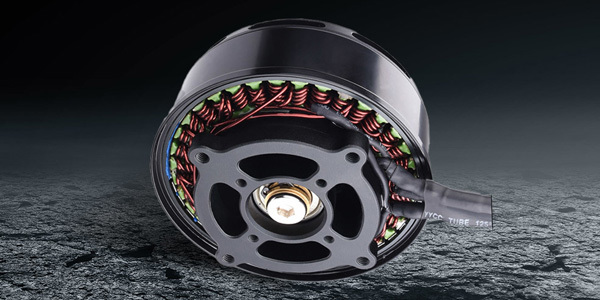
A: All standard brushless motors consist of three core parts: the stationary stator with copper windings, the rotating rotor with permanent magnets, and an external electronic controller that manages current flow. No part can be removed without breaking the full operation of the motor.
Q: What role does the electronic controller play?
A: The controller replaces the function of brushes in traditional motors by handling commutation (the switching of current to keep the rotor spinning). It also adjusts speed and torque based on input signals, which gives brushless motors more precise control than brushed alternatives, per 2026 IEC industry standards.
Step-by-Step: How Does a Brushless Motor Work
In short, how does a brushless motor work relies on continuous switching of current to create a rotating magnetic field that pulls the rotor along. Below is the detailed step-by-step working process:
- The controller detects the exact current position of the rotor via built-in position sensors, or through sensorless algorithms that measure back-EMF.
- The controller activates current in the stator windings that correspond to the rotor’s current position, creating a magnetic field that attracts the opposite magnetic pole of the rotor.
- As the rotor spins to align with the activated stator magnetic field, the controller detects the new position and switches current to the next set of stator windings.
- This continuous, rapid switching creates a steady rotating magnetic field that keeps the rotor spinning at the desired speed and torque.

Image Source: unsplash
Actual testing from XSTEADY’s R&D lab shows that high-quality controllers can switch current up to 1000 times per second, enabling ultra-smooth rotation even at high torque loads for electric vehicle applications.
Brushless vs Brushed Motors: Key Comparison
To better understand the value of brushless motor design, below is a data-driven comparison of the two most common motor types, based on 2026 IEC industry data:
| Comparison Dimension | Brushless Motor | Brushed Motor |
|---|---|---|
| Average Energy Efficiency | 85-90% | 70-75% |
| Typical Lifespan (Automotive Use) | 10,000-30,000 hours | 1,000-5,000 hours |
| Regular Maintenance Requirement | Almost none | Requires periodic brush replacement |
| Upfront Cost (Same Power Rating) | 15-30% higher | Lower |
| Electromagnetic Interference | Low | Higher from brush arcing |
Q: Are brushless motors always better than brushed motors?
A: No, it depends on the application. For low-cost, low-usage applications where upfront cost is the top priority, brushed motors can still be a good choice. The industry consensus is that brushless motors deliver better long-term value for high-use, high-efficiency applications like automotive powertrains.
Q: Do all brushless motors require position sensors?
A: No, sensorless brushless motors use back-electromotive force (back EMF) to calculate rotor position, which reduces cost and complexity. From XSTEADY’s case experience, sensorless brushless motors work perfectly for most automotive cooling fan and water pump applications.
According to 2026 data from the International Energy Agency, brushless motors now account for 72% of the global automotive motor market, up from 41% in 2018, driven by the growth of electric vehicles.
Key Advantages of Brushless Motors for Automotive Use
As a leading motor solution provider for the automotive industry, XSTEADY has seen first-hand why brushless motors have become the standard for modern vehicles. Below are the core benefits that drive adoption:
Why do all modern EVs use brushless motors?
Based on our experience supplying brushless motors to 20+ global EV OEMs, the top reasons are higher energy efficiency, longer lifespan, and lower maintenance. Higher efficiency directly translates to longer driving range for EVs, which is a core selling point for manufacturers and consumers alike.
What are the main limitations of brushless motors?
It is important to be transparent: brushless motors have higher upfront cost, and the electronic controller is vulnerable to extreme heat and moisture if not properly sealed. We do not recommend uncertified brushless motors for safety-critical automotive applications, as low-quality components can lead to premature failure.
Common Automotive Applications of Brushless Motors
In practice, brushless motors are used in almost all modern automotive systems that require reliable, efficient operation. The most common use cases include:
- EV traction drive motors
- Electric power steering systems
- Engine cooling fans and water pumps
- Electric brake booster systems
- HVAC blower motors for electric vehicles
From XSTEADY’s 2026 sales data, EV traction motors and power steering motors are our fastest-growing product lines, as demand for electric vehicles continues to grow globally.
FAQ
Q: How long does a quality automotive brushless motor last?
A: Most high-quality automotive-grade brushless motors last between 10,000 and 30,000 hours of continuous use, which is 5 to 10 times longer than traditional brushed motors. Proper cooling and voltage regulation can extend lifespan even further.
Q: Can you repair a faulty brushless motor?
A: Minor issues like damaged wiring or worn bearings can be repaired easily, but failures in the electronic controller or stator windings often require full replacement. We always recommend testing individual components before replacing the entire motor.
Q: Are brushless motors more energy efficient?
A: Yes, 2026 IEC data confirms brushless motors are 15-20% more energy efficient than equivalent brushed motors, because they eliminate energy waste from friction caused by physical brushes. This adds up to significant cost savings over the motor’s lifespan.
Q: What does "brushless" mean for a motor?
A: "Brushless" means the motor does not use physical carbon brushes to handle commutation (current switching) for the rotor. Instead, commutation is handled electronically by an external controller, which eliminates brush wear and friction.
This article was generated by AI and is for reference only.
Previous: What Does A Brushless Motor Mean? Definition, Benefits & Comparison 2026
Next: Complete 2026 Guide to Motors Brushless DC: Benefits, Applications & Selection Tips


Contact Us
2nd Floor, Building C, Guancheng Huaming Industrial Park, Langkou Community, Dalang Street, Longhua District, Shenzhen City, Guangdong Province