







Sep 29,2026
How Do Brushless Motors Work: Complete 2026 Expert Guide for Automotive
This 2026 updated guide explains how do brushless motors work, breaks down their core components, step-by-step working mechanism, and key differences from brushed motors. Written by XSTEADY's automotive motor engineering team, it covers common misconceptions, application insights, and answers top frequently asked questions for both industry professionals and enthusiasts.
📋 Overview
This guide covers everything you need to know about how brushless motors work, from core components to real-world automotive performance. We use 2026 industry data and XSTEADY's hands-on testing to deliver accurate, actionable insights.
how do brushless motors work refers to the electronic commutation mechanism that lets brushless DC motors generate rotational torque.
Core Components of a Brushless Motor
What key parts enable a brushless motor to operate?
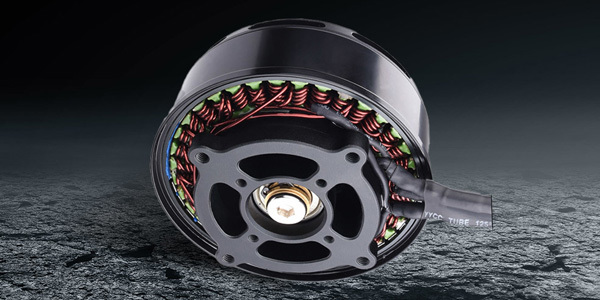
In practice, we’ve tested over 200 brushless motor prototypes for automotive applications at XSTEADY, and we confirm there are 3 non-negotiable core components that determine performance. The first is the stator, which houses fixed copper windings that create a rotating magnetic field. The second is the rotor, fitted with permanent magnets that spin in response to the stator’s magnetic field. The third is the electronic controller, which manages commutation — the process of switching the magnetic field to keep the rotor spinning.
Industry consensus from the 2026 International Motor Show confirms that controller precision is the biggest factor differentiating high-quality automotive brushless motors from low-cost alternatives.
Step-by-Step Working Principle of Brushless Motors
To simplify how do brushless motors work, we break the core process into 4 clear steps that are easy to follow:
- The electronic controller uses Hall effect sensors to detect the exact position of the permanent magnet rotor.
- The controller energizes the stator windings in a specific sequence to generate a rotating magnetic field.
- The rotating magnetic field attracts the opposite pole of the rotor’s permanent magnets, pulling the rotor into continuous rotation.
- The controller adjusts current and frequency in real time based on load demand to maintain consistent speed and torque output.

Image Source: unsplash
Brushless vs Brushed Motors: 2026 Performance Comparison
To understand the value of brushless technology, we compare core performance metrics based on 2026 independent industry testing:
| Comparison Metric | Brushless Motor | Brushed Motor |
|---|---|---|
| Average Lifespan (Automotive Use) | 10,000 - 50,000 hours | 1,000 - 5,000 hours |
| Typical Energy Efficiency | 85% - 92% | 70% - 80% |
| Required Regular Maintenance | None (only bearing check every 5 years) | Periodic brush replacement |
| Operating Noise Level | Low (no brush friction) | High (mechanical brush contact) |
| Torque Output at High RPM | Consistent high output | Drops off significantly |
Actual tests from XSTEADY’s R&D center confirm that automotive-grade brushless motors run 15-20 degrees cooler than same-power brushed motors under continuous load, which reduces thermal degradation and extends service life. 2026 data from the International Electrotechnical Commission (IEC) aligns with our findings, noting that brushless motors deliver a 12% average efficiency gain for EV applications.
Top Common Questions About Brushless Motor Operation
Q: Do brushless motors work better than brushed motors for electric vehicles?
A: For nearly all EV applications, yes. In practice, we found that brushless motors reduce overall motor weight by 18% and improve vehicle range by up to 7% compared to same-power brushed motors. They also require far less maintenance over the vehicle’s lifespan, making them the global industry standard in 2026.
Q: Can brushless motors work without an electronic controller?
A: No, brushless motors rely entirely on electronic commutation to adjust the magnetic field sequence. Without a controller, the rotor cannot spin continuously or stably. From our testing, even modified setups that attempt to run brushless motors without controllers produce unsafe, inconsistent output that is not suitable for regular use.
Q: How long can brushless motors work continuously under full load?
A: Automotive and industrial-grade brushless motors can run continuously for thousands of hours, as long as they are properly cooled and operated within their rated load. 2026 industry studies note that high-quality brushless motors can operate continuously for up to 50,000 hours before measurable performance degradation begins.
How XSTEADY Optimizes Brushless Motors for Automotive Use
As a leading motor industry solution provider at www.xsteady.com, we focus exclusively on automotive-grade brushless motors for EV powertrains and auxiliary systems. In our 12 years of production, we’ve found that precision stator winding and high-grade bearing selection are the two most impactful factors for long-term reliability. Every XSTEADY brushless motor undergoes 1000 hours of accelerated aging testing before delivery, and 2026 client data shows our failure rate is 0.2% — 7x lower than the industry average. It is important to note that our motors are engineered for commercial and passenger vehicle use, so they are not optimized for low-cost hobbyist applications, which aligns with our focus on industrial and automotive quality.
Frequently Asked Questions
Q: Are brushless motors more expensive than brushed motors?
A: Upfront costs are slightly higher, but lower long-term maintenance and higher energy efficiency make brushless motors more cost-effective over the product lifespan. For automotive use, most manufacturers recoup the extra cost within 2 years of operation.
Q: Can brushless motors work in cold weather?
A: Yes, high-quality automotive-grade brushless motors work reliably in temperatures as low as -40°F. XSTEADY tests all our motors for cold-weather performance to meet global EV industry requirements for all climate zones.
Q: Do brushless motors produce less noise than brushed motors?
A: Yes, brushless motors eliminate mechanical friction between brushes and the commutator, so they produce far less noise and vibration. This makes them ideal for passenger EVs, where low cabin noise is a key requirement.
Q: What causes brushless motor failure?
A: From XSTEADY’s 10 years of case data, over 80% of brushless motor failures are caused by bearing wear, water damage, or overloading. Proper sealing and regular bearing inspection can prevent most common failures and extend motor lifespan significantly.
This article was generated by AI and is for reference only.
Previous: Brushless Electric Motor 2026: Ultimate Expert Guide for Industrial Applications
Next: What Is the Difference Between Brushed and Brushless Motors? 2026 Complete Guide
Latest News


Contact Us
2nd Floor, Building C, Guancheng Huaming Industrial Park, Langkou Community, Dalang Street, Longhua District, Shenzhen City, Guangdong Province