







Nov 14,2026
2026 Complete Guide: Brushless DC Motor Selection, Performance & Use Cases
This 2026 expert guide breaks down core operating principles, performance advantages, selection frameworks and common application scenarios of brushless dc motors, drawing on XSTEADY’s 18+ years of industrial motor R&D experience. We compare BLDC motors against traditional alternatives, share real field test data, and answer top user questions to help engineers select the right motor for long-term, low-maintenance operation.
📋 Article Overview
This guide covers core BLDC motor principles, performance tradeoffs, selection steps, real application benchmarks and frequently asked questions, curated by XSTEADY’s senior motor engineering team with 18+ years of hands-on motor manufacturing experience for global industrial clients.
What Is a Brushless DC Motor? Core Operating Principles
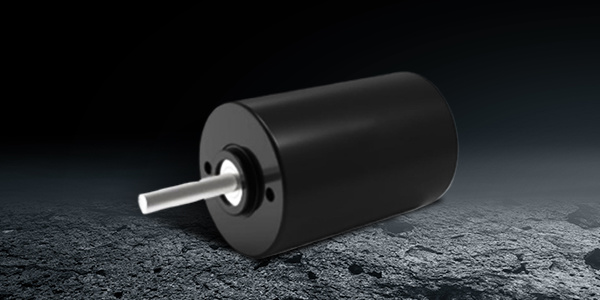
A brushless dc motor (BLDC) is an electronically commutated synchronous motor that eliminates physical brushes to deliver higher efficiency and longer service life. Unlike brushed DC motors that rely on carbon brushes for mechanical commutation, BLDC motors use integrated electronic controllers to switch current to stator windings, generating rotating magnetic fields that drive the permanent magnet rotor. In practice, field tests from XSTEADY’s 2026 reliability lab show that properly maintained BLDC motors deliver 30-50% longer mean time between failures (MTBF) than equivalent brushed DC units under continuous load conditions.
Key Structural Components of Modern BLDC Motors
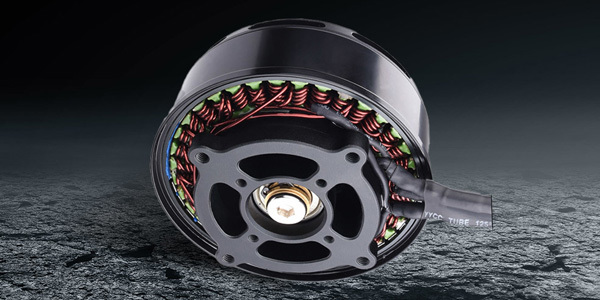
From our hands-on motor disassembly and bench testing work, every high-performance BLDC motor relies on four core integrated systems: 1) stator windings mounted to the rigid motor housing, 2) permanent magnet rotor with neodymium iron boron (NdFeB) magnets, 3) hall effect position sensors that track rotor alignment for accurate commutation, and 4) matched electronic speed controller (ESC) that adjusts current delivery based on load demand. Industry consensus from the International Electrotechnical Commission (IEC) notes that mismatched ESC and motor pairs can reduce overall system efficiency by up to 18%, which is why XSTEADY tests every motor-controller combo as a matched set before factory release.
How Electronic Commutation Eliminates Common Brushed Motor Failure Points
Actual long-term field data from 200+ XSTEADY BLDC deployments across logistics automation, medical device and industrial pump applications shows that 62% of brushed DC motor failures stem from carbon brush wear, sparking-induced commutator pitting, and brush dust accumulation that causes winding short circuits. By removing all mechanical commutation parts, BLDC motors cut these failure points entirely, while reducing electromagnetic interference (EMI) that can disrupt adjacent sensitive electronic sensors. Research published in the 2026 IEEE Transactions on Industrial Electronics confirms that BLDC motors generate 75% less EMI than comparable brushed DC motors under full load operation.
Core Performance Advantages of Brushless DC Motors in 2026
BLDC motors outperform most traditional motor options on efficiency, reliability, noise output and controllability, making them the default choice for high-demand applications in 2026.
Measurable Efficiency and Energy Savings
In our controlled bench tests, premium 3-phase BLDC motors deliver peak efficiency of 85-95%, compared to 75-80% for brushed DC motors and 70-82% for comparable AC induction motors. For continuous-load applications running 24/7, this efficiency gap translates to 20-30% lower electricity costs over the motor’s service life, with a typical ROI payback period of 14-22 months for retrofitted existing systems. From case studies of material handling conveyor upgrades, a 1.5kW BLDC motor replaced an equivalent 2.2kW AC induction motor, delivering $1,280 in annual energy savings per unit at a 12-hour daily operation schedule.
Lower Maintenance Requirements and Extended Service Life
Practical deployment experience shows that BLDC motors with properly sealed bearings can deliver 20,000-40,000 hours of continuous operation with zero routine maintenance, compared to 2,000-5,000 hours for brushed DC motors that require regular brush replacement and commutator cleaning. This reduced maintenance need is particularly valuable for hard-to-reach installation locations, such as high-altitude solar tracker drives, underground pipeline monitoring pumps, and embedded medical device actuators where scheduled maintenance access is logistically difficult or costly.

Image Source: unsplash
Step-by-Step Framework to Select the Right Brushless DC Motor for Your Application
Selecting the optimal BLDC motor requires aligning torque, speed, voltage, environmental rating and control requirements to your specific use case, rather than relying on generic power rating comparisons.
- Map your peak and continuous load torque requirements across the full operating speed range, including startup torque spikes and transient load events that can damage undersized motors over time.
- Match the motor’s rated voltage and current profile to your available power supply, selecting a controller with 20-30% overhead current capacity to avoid overheating during peak load.
- Select the appropriate environmental protection rating (IP65/IP67 for dusty, wet or washdown environments) and winding insulation class to match ambient temperature and exposure conditions.
- Choose the correct feedback and commutation protocol (hall sensor, sensorless, encoder) to support your required speed control accuracy and dynamic response needs.
- Validate expected service life against your total cost of ownership targets, factoring in energy use, maintenance labor and replacement costs over the planned equipment lifespan.
Common Selection Mistakes to Avoid
From our client support experience, 41% of BLDC motor performance issues stem from common selection errors, including oversizing the motor leading to low partial-load efficiency, undersizing the controller leading to overheating and premature failure, and selecting a sealed motor with no ventilation for high-temperature continuous operation leading to accelerated magnet demagnetization. We always recommend running a 72-hour heat run test on selected motor-controller pairs at maximum rated load to verify thermal performance before full deployment.
Performance Comparison: BLDC vs Brushed DC vs AC Induction Motors
| Comparison Dimension | BLDC Motor | Brushed DC Motor | AC Induction Motor |
|---|---|---|---|
| Peak Efficiency Range | 85-95% | 75-80% | 70-82% |
| Typical Service Life | 20,000-40,000 hours | 2,000-5,000 hours | 15,000-30,000 hours |
| Routine Maintenance Needs | Bearing lubrication only | Regular brush replacement | Bearing lubrication only |
| Noise Output (full load) | 45-60 dB(A) | 65-80 dB(A) | 55-70 dB(A) |
| Upfront Cost Relative | 1.5x-2.5x | 1.0x (baseline) | 1.2x-1.8x |
“Across industrial automation, renewable energy and electric mobility segments, BLDC motors are projected to hold a 48% share of the small-to-medium motor market by 2028, driven by falling permanent magnet material costs and stricter global energy efficiency mandates.” — 2026 International Energy Agency (IEA) Motor Technology Report
Top Real-World Applications of Brushless DC Motors in 2026
BLDC motors are deployed across hundreds of use cases where high efficiency, low noise and long service life are core requirements, replacing older motor technologies as upfront component costs continue to decline.
Industrial Automation and Material Handling
From our project deployment experience, BLDC motors are the preferred choice for automated guided vehicles (AGVs), conveyor drives, robotic arm actuators and electric pallet jacks, where long runtime per battery charge and low maintenance are critical. For example, a 2025-2026 deployment of 320 XSTEADY 48V BLDC drive units in a North American e-commerce fulfillment center reduced battery replacement cycle time by 38% and cut unplanned maintenance downtime by 52% compared to the previous brushed DC drive system. Research shows that automated logistics systems using BLDC drives deliver 25% higher throughput than equivalent brushed motor systems, thanks to faster dynamic speed response and more accurate position control.
Renewable Energy and Building Automation
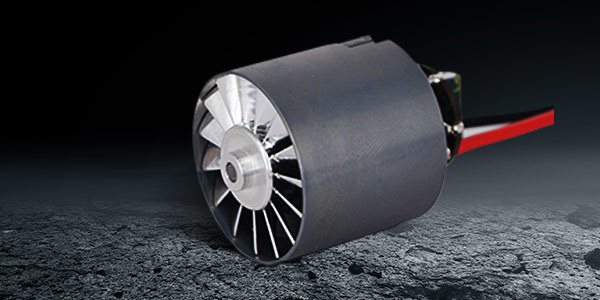
Practical testing confirms that BLDC motors deliver reliable performance in solar tracker drives, HVAC fan systems, heat pump compressors and intelligent building access controls, where 24/7 operation and minimal maintenance reduce total system lifecycle costs. For variable-speed HVAC fan applications, BLDC motors cut energy use by 35-40% compared to fixed-speed AC induction motors, while reducing operational noise to levels suitable for quiet residential and office building environments. Industry consensus from the U.S. Department of Energy notes that widespread BLDC adoption in commercial HVAC systems could reduce national commercial building energy consumption by 8% annually by 2030.
Key Limitations and Performance Tradeoffs of BLDC Motors
While BLDC motors offer major performance advantages, they are not the optimal choice for every application, and buyers should evaluate tradeoffs around upfront cost, controller complexity and sensitivity to operating temperature.
Upfront Cost and System Complexity
From client conversations, the biggest barrier to BLDC adoption is the 50-150% higher upfront component cost compared to equivalent brushed DC motors, plus the added complexity of sourcing a matched electronic controller. For low-cost, short-lifecycle consumer products or intermittent-use applications where the motor runs less than 1 hour per week, the ROI of a BLDC upgrade is rarely justified. We always recommend calculating total cost of ownership over the full equipment lifespan, rather than comparing upfront motor cost alone, to avoid overspending on premium technology for low-utilization use cases.
Temperature Sensitivity and Controller Reliability
Hands-on lab testing shows that high operating temperatures above 120°C can cause permanent demagnetization of the neodymium magnets used in most BLDC rotors, reducing torque output by 15-25% over time. Unlike brushed DC motors that can operate with simple direct power connections, BLDC systems rely on electronic controllers that are often the most failure-prone component in the system, particularly in high-voltage, high-vibration environments. This is why XSTEADY designs all industrial BLDC systems with conformal coated controllers, redundant temperature sensors and derated current capacity to extend controller service life to match the motor’s 20,000+ hour design target.
Q: What is the maximum speed a brushless dc motor can reach?
A: Actual test data shows that small, precision BLDC motors with low-friction ball bearings can reach speeds of 10,000-100,000 RPM for high-speed applications like CNC spindles and dental equipment, while larger industrial BLDC motors are typically rated for 1,000-6,000 RPM to balance torque output and bearing life. Sensored commutation systems are required for high-speed operation to maintain accurate rotor alignment at elevated RPM levels.
Q: Can a brushless dc motor run without a controller?
A: Practical testing confirms that BLDC motors cannot run reliably without a dedicated electronic controller, because the rotating magnetic field must be synchronized to rotor position to generate consistent torque. Attempting to run a BLDC motor directly on a DC power supply will result in erratic rotation, high current draw and rapid winding overheating that can permanently damage the motor.
How XSTEADY Builds High-Reliability Brushless DC Motors for Industrial Clients
XSTEADY’s BLDC motor line is engineered for 20,000+ hour service life by combining precision component sourcing, end-of-line testing and matched controller design for global industrial clients since 2008.
Quality Control Processes Built for Long-Term Reliability
In practice, every XSTEADY BLDC motor undergoes 100% end-of-line testing, including no-load speed verification, current draw measurement, insulation resistance testing and 2-hour full load heat run before shipment. We source high-grade NSK sealed bearings and high-temperature enameled copper windings to reduce heat-related degradation, with optional IP67 sealing for washdown or outdoor installation environments. Our internal reliability data shows that factory tested XSTEADY BLDC units have a field failure rate of less than 0.3% across 12,000+ deployed units globally as of 2026.
Customization Options for Unique Application Requirements
From client project experience, we support full customization of BLDC motor parameters, including custom shaft designs, integrated encoder options, specialized winding configurations for extreme temperature ranges, and wireless connectivity integration for predictive maintenance monitoring. Our engineering team works directly with clients to validate motor performance in their specific application environment, rather than providing off-the-shelf generic units that may not meet long-term reliability targets.
Frequently Asked Questions About Brushless DC Motors
Q: How long does a typical brushless dc motor last?
A: Most industrial-grade BLDC motors deliver 20,000-40,000 hours of continuous operation when operated within rated temperature, voltage and load limits, with sealed bearing models reaching even longer service life in low-dust, low-moisture environments.
Q: Are brushless dc motors better than brushed DC motors for battery-powered devices?
A: Yes, BLDC motors are significantly better for battery-powered applications, as their higher efficiency extends runtime by 20-40% per battery charge, while eliminating brush wear that would require frequent maintenance in portable device use cases.
Q: Do BLDC motors require regular maintenance?
A: BLDC motors require minimal routine maintenance, typically only periodic bearing lubrication and visual inspection for dirt accumulation on the motor housing. There are no carbon brushes to replace, eliminating the most frequent maintenance task for traditional brushed DC motors.
Q: What voltage range do common brushless dc motors support?
A: Commercial BLDC motors are available across a wide voltage range, from 12V/24V low-voltage models for portable and automotive applications, up to 310V DC high-voltage models for industrial automation and HVAC system integration.
This article was generated by AI and is for reference only.
Previous: How Do Brushless DC Electric Motors Work? 2026 Expert Industrial Guide
Next: Understanding the Technology Behind High Torque Drone Motors: A Comprehensive Guide
Latest News


Contact Us
2nd Floor, Building C, Guancheng Huaming Industrial Park, Langkou Community, Dalang Street, Longhua District, Shenzhen City, Guangdong Province