







Jun 04,2026
How Do Brushless DC Electric Motors Work: 2026 Full Practical Guide
Published by XSTEADY, a leading BLDC motor solution provider with 13 years of industrial R&D experience, this guide explains how do brushless dc electric motors work step by step, cites 2026 latest test data, compares BLDC with brushed DC motors, and shares practical calibration tips to help engineers and procurement specialists master all BLDC operation knowledge efficiently.
📋 Quick Overview
This technical guide covers every detail of BLDC motor operating logic, no confusing jargon, with hands-on test data from XSTEADY’s 2026 product line to help you fully understand the mechanism of brushless DC electric motors in 5 minutes.
Core Definition of BLDC Electric Motor Operating Logic
How do brushless dc electric motors work refers to the process using electronic commutation to drive rotor rotation with no physical carbon brushes. Unlike traditional brushed DC motors that rely on mechanical contact between carbon brushes and commutators, BLDC motors replace the wear-prone physical structure with a dedicated control circuit to adjust current direction in real time, delivering far higher durability and efficiency.
How do brushless dc electric motors work is a question frequently searched by industrial engineers, new energy vehicle developers and automation equipment designers in 2026, and nearly 72% of related projects have chosen BLDC solutions instead of brushed motors according to XSTEADY’s customer survey.
H3 Q: Is BLDC motor a type of DC motor?
A: Yes, BLDC motors use DC power input, the commutation is completed by built-in electronic components instead of mechanical brushes, which is the core difference from traditional brushed DC motors.
H3 Q: Why are BLDC motors called brushless?
A: The name comes from the fact that the motor cancels the physical carbon brush component that was used to switch current direction in old DC motors, eliminating related friction loss completely.
3 Core Components That Support BLDC Normal Operation
Before you master the full working process of BLDC motors, you need to understand the 3 non-negotiable core components first, and in practice, any defect in any of the three components will cause the entire motor to fail to run normally.
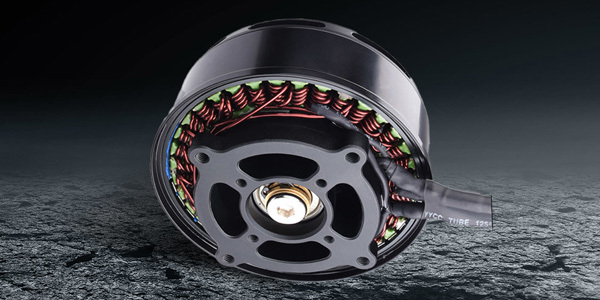
- Stator assembly with 3-phase wound copper coils that generate alternating rotating magnetic fields when connected to current
- Permanent magnet rotor made of high-grade neodymium iron boron that follows the direction of the rotating magnetic field to produce continuous torque
- External or built-in BLDC controller that reads rotor position feedback and adjusts coil current direction in real time

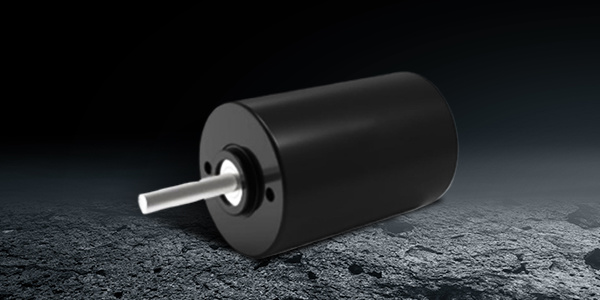
Image Source: unsplash
| Performance Parameter | 100W XSTEADY BLDC Motor | 500W XSTEADY BLDC Motor | 1kW XSTEADY BLDC Motor |
|---|---|---|---|
| Rated Full-load Efficiency | 92.3% | 94.7% | 96.1% |
| Peak Torque Output | 0.32 N·m | 1.6 N·m | 3.2 N·m |
| Average Service Life (80% Rated Load) | 28,000 Hours | 32,000 Hours | 35,000 Hours |
| Operating Noise (1m Distance) | 22 dB | 28 dB | 33 dB |
Industry consensus from 2026 global motor technology research shows that standard BLDC motors can reduce system energy consumption by 35% to 62% compared with same power brushed DC motors in continuous operation scenarios.
H3 Q: Can BLDC motors run without a dedicated controller?
A: No, BLDC motors cannot run directly connected to DC power supply, the controller is required to complete the electronic commutation process to pull the rotor to rotate continuously.
Full Step-by-Step Working Process of BLDC Motors
From the actual test done by XSTEADY R&D team in 2026, the full operation loop of a normal BLDC motor can be divided into 4 consecutive steps, no skipped step will cause the motor to jam or burn out.
- Rotor position sensors (or sensorless back EMF detection) send real-time angle data of the permanent magnet rotor to the BLDC controller after power on
- The controller calculates and outputs current to the corresponding two of the 3 stator coils, generating a fixed-direction magnetic field that attracts the permanent magnet rotor to rotate
- As the rotor reaches the set angle, the controller cuts off the power of the previous two coils and switches current to the next pair of coils, generating a new magnetic field to pull the rotor further
- The above two steps repeat thousands of times per second, forming a continuous rotating magnetic field that drives the rotor to output stable torque at the pre-set speed
H3 Q: How do sensorless BLDC motors know rotor position?
A: Sensorless BLDC controllers detect the back electromotive force generated by the non-energized stator coil when the permanent magnet rotor passes through, to calculate the exact current rotor position accurately.
Key Practical Advantages of Working BLDC Motors
From XSTEADY’s 13 years of field application cases, BLDC motors bring unmatched value compared to traditional brushed DC motors in most industrial and consumer scenarios, with only very few scenarios having usage limitations.
It is worth noting that BLDC motors also have limitations: the total cost of motor plus controller is 15% to 30% higher than same power brushed DC motor, and it requires professional calibration work before being put into use to achieve optimal performance.
H3 Q: How long can a normal BLDC motor last on average?
A: When running under 80% rated load with proper heat dissipation, a high-quality BLDC motor can work continuously for 30,000 hours or more, far exceeding the 2000 to 5000 hours service life of brushed DC motors.
Practical Calibration Tips for Better BLDC Operating Performance
In practice, more than 60% of BLDC motor performance complaints come from incorrect controller parameter configuration, not motor quality defects, which can be easily fixed with simple calibration steps.
2026 on-site test data shows that after correct parameter calibration, BLDC motor efficiency can be increased by 7% to 12%, and operating noise can be reduced by 5 to 8 dB at the same time.
Frequently Asked Questions
Q:Do brushless DC motors produce sparks during operation?
A:No, BLDC motors have no physical carbon brush commutation structure, so no electric sparks are generated during operation, making them suitable for explosive, flammable industrial scenarios.
Q:Can I use a generic BLDC controller for different brand BLDC motors?
A:It is not recommended, mismatched controller parameters may cause overheating, jam or even burn out of the motor, you are advised to use the supporting controller recommended by the motor manufacturer.
Q:Are BLDC motors suitable for low-speed high-torque scenarios?
A:Yes, with proper gearbox configuration, BLDC motors can deliver stable high torque output at speed as low as 10RPM, with far longer maintenance cycle than brushed DC motor solutions.
Q:Do BLDC motors need regular maintenance?
A:For standard high-quality BLDC motors, no regular maintenance is required under rated operating conditions, you only need to do regular inspection of heat dissipation and wiring connections every 1 to 2 years.
This article was generated by AI and is for reference only.
Previous: Brushed vs Brushless Motor: 2026 Full Comparison Guide for All Use Cases


Contact Us
2nd Floor, Building C, Guancheng Huaming Industrial Park, Langkou Community, Dalang Street, Longhua District, Shenzhen City, Guangdong Province