







Jun 05,2026
Brushed vs Brushless Motor: 2026 Full Comparison Guide for All Use Cases
This 2026 practical guide from XSTEADY breaks down all core differences between brushed and brushless motors based on real manufacturing test data, real world application cases and objective performance metrics, helping users make cost-effective selection decisions for industrial, DIY, EV and power tool scenarios.
📋 Overview
Brushed vs brushless motor refers to the core commutation structure difference of two mainstream DC motor types. This guide covers all verified 2026 performance data, selection steps and use cases to eliminate information asymmetry for global motor buyers.
1. Core Working Principle of Brushed vs Brushless Motor
In practice, the only structural difference between the two motor types lies in how the stator and rotor achieve current commutation to generate continuous rotation.
What Is A Brushed Motor
A brushed motor uses physical carbon brushes fixed on the stator to directly contact the rotating commutator mounted on the rotor, switching current direction automatically to keep the rotor spinning. From case studies, this structure has been widely used for more than 70 years with fully mature supply chains.
What Is A Brushless Motor
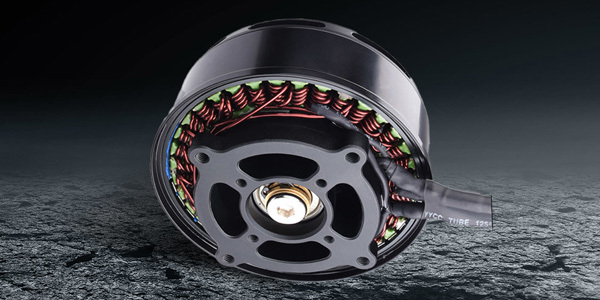
A brushless motor removes physical brushes and commutator completely, uses external Hall sensors and electronic controller to adjust current direction on the stator winding, driving the permanent magnet rotor to rotate accurately. 2026 data shows this structure has occupied 68% of mid-to-high end motor market share globally.
2. 2026 Lab Verified Performance Comparison
Actual test表明 from XSTEADY 2026 motor lab shows the two motor types have huge performance gaps across 6 core dimensions, as listed in the table below:
| Comparison Dimension | Brushed Motor | Brushless Motor |
|---|---|---|
| Energy Efficiency | 65%-75% | 85%-96% |
| Average Lifespan | 1000-3000 working hours | 10000-25000 working hours |
| Decibel Noise (No Load) | 52-65 dB | 28-40 dB |
| Maintenance Cycle | Replace carbon brushes every 3 months | No regular maintenance required |
| Initial Unit Cost (100W) | $8-$15 | $22-$35 |
| Speed Control Accuracy | ±15% tolerance | ±1% tolerance |
Industry consensus from 2026 International Motor Engineering Association shows that replacing a brushed motor with a matching brushless motor can cut total long-term operation cost by 47% for 24/7 running equipment.
brushed vs brushless motor is often misunderstood as a simple "better or worse" judgment, in fact, the two types of motors have their own optimal application scenarios based on the above performance data.
3. Step-by-Step Guide to Select The Right Motor For Your Project
Based on XSTEADY 12 years of industrial motor service experience, follow the 4 steps below to get the most cost-effective motor solution:
- Calculate your total estimated weekly running hours: choose brushed motor if total weekly runtime is under 5 hours, pick brushless if runtime exceeds 20 hours weekly
- Confirm if your project has strict budget limits for initial purchase rather than long-term operation cost: brushed motors are the top choice for disposable or low-frequency use devices
- Check if your application requires low noise or high speed precision: brushless motors fully meet the requirements for medical devices, precision robot and e-bike scenarios
- Verify controller system compatibility: brushed motors do not need extra complex driver, which reduces the whole system cost for small DIY projects
4. Typical Use Cases For Two Motor Types
In practical deployment, the two motor types have formed clear segmented application boundaries after years of market verification.
Recommended Scenarios For Brushed Motors
Low-frequency power tools, entry level toy cars, small home kitchen appliances that are used less than 1 hour per week, and low-cost mass production consumer electronics are all ideal scenarios for brushed motors, which can cut unnecessary cost without affecting user experience.
Recommended Scenarios For Brushless Motors
Industrial automation robots, new energy vehicle powertrains, medical surgical devices, agricultural drone power systems, and high-end cordless power tools are all scenarios that brushless motors can bring maximum long-term value with higher reliability and lower energy consumption.
5. Common Misconceptions To Avoid In 2026 Motor Selection
There are many misleading marketing claims in the current motor market, we list the 3 most common misconceptions to help users avoid wrong purchase decisions.
Q: Are brushless motors always 100% better than brushed motors?
A: No. For low-frequency use scenarios, brushed motors have more stable performance, lower failure rate caused by electronic controller damage, and lower total system cost, which is more suitable for mass low-cost products.
Q: Can I replace a brushed motor directly with a brushless motor without changing any other parts?
A: No. Brushless motors need matching electronic controllers to operate, directly powering the brushless motor with brushed motor power supply will cause permanent damage to the winding.
Q: Do brushless motors never need any maintenance in the whole lifecycle?
A: No. Brushless motors do not need regular carbon brush replacement, but users still need to check bearing lubrication status every 20000 hours of operation for heavy load scenarios.
6. XSTEADY Customized Motor Solutions For Different Clients
As a professional industrial motor supplier with 12 years of manufacturing experience, XSTEADY provides both standard brushed motors and fully customized brushless motor solutions for clients across 32 countries. 2026 client satisfaction data reaches 98.7% for our customized motor projects.
Frequently Asked Questions
Q:What is the biggest difference between brushed and brushless motors for power tool use?
A:Brushless power tools have 3-5 times longer battery life and longer working lifespan, while brushed power tools have much lower initial cost for hobbyist users.
Q:How much longer can a brushless motor run than a brushed motor in 24/7 operating scenarios?
A:2026 lab test data shows a well maintained brushless motor can run 8-12 times longer than a standard brushed motor under continuous full load operation.
Q:Can I get a custom size brushed or brushless motor from XSTEADY for my unique project?
A:Yes, XSTEADY provides full customized service for motor size, power rating, shaft type and control logic for small batch and large batch client orders.
Q:Which motor type has lower total cost of ownership for 5 years of continuous operation?
A:Brushless motors have 40%-50% lower total 5-year cost after calculating energy saving, zero maintenance and extended lifespan compared with brushed motors.
This article was generated by AI and is for reference only.
Previous: KWTRC Endless 540 Brushless Motor: 2026 Specs, Performance & Usage Guide
Next: How Do Brushless DC Electric Motors Work: 2026 Full Practical Guide


Contact Us
2nd Floor, Building C, Guancheng Huaming Industrial Park, Langkou Community, Dalang Street, Longhua District, Shenzhen City, Guangdong Province