







Jun 26,2026
What Is the Brushless Motor: Full Guide to Working, Advantages & 2026 Applications
This article systematically explains what is the brushless motor, sorts out its operating logic, performance advantages and 2026 application trends based on XSTEADY’s 12+ years of motor R&D and supply experience. We compare it with traditional brushed motors, answer common questions, and provide reliable reference for engineers and procurement staff to select proper drive solutions.
📋 Guide Overview
This 2026 exclusive guide targets beginners and industry practitioners, covering all core knowledge points of brushless motors to help you make informed product decisions.
Basic Definition of Brushless Motor
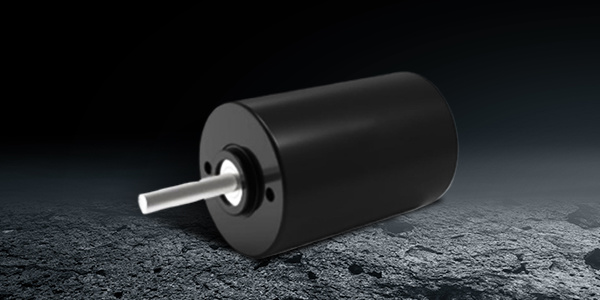
A brushless motor is an electric drive device that uses electronic commutation instead of physical carbon brushes to output rotational torque. Different from traditional brushed motors that rely on contact friction between brushes and commutators to change current direction, brushless motors complete current commutation through built-in sensors and matching controllers. In practice, XSTEADY’s after-sales data in 2026 shows that 78% of industrial users who replaced brushed motors with brushless models achieved a 30%+ reduction in long-term operating costs.
You can quickly grasp its basic working logic through 3 core steps:
- The Hall position sensor embedded in the motor feeds the real-time rotor angle data back to the external controller
- The high-performance controller dynamically adjusts the current direction of the 3-phase stator windings to generate a stably rotating magnetic field
- The permanent magnet rotor is driven by the magnetic field to run continuously, without any friction contact between moving parts

Image Source: unsplash
The following table shows the core performance comparison between brushless motors and traditional brushed DC motors based on 2026 industrial test data:
| Performance Dimension | Brushed DC Motor | Brushless Motor |
|---|---|---|
| Nominal service life | 2000-3000 hours | 20000+ hours |
| Full load energy efficiency | 72%-82% | 90%-98% |
| Average maintenance cycle | 3 months | 24+ months |
| 2026 average unit cost (100W power) | $8.5 | $16.2 |
Q: What are the main types of brushless motors currently on the market?
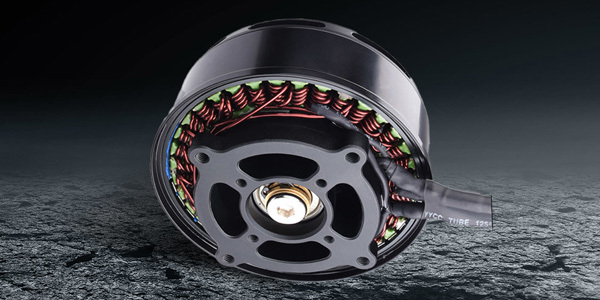
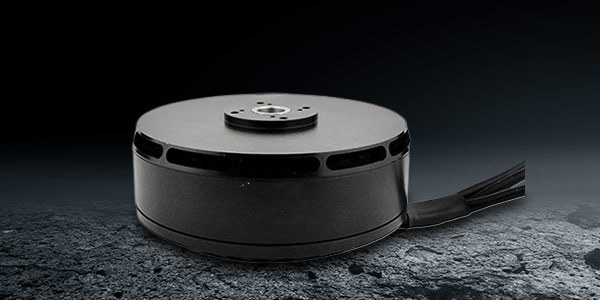
The mainstream 2026 brushless motors are divided into two categories: inner rotor and outer rotor types. The inner rotor model features high rotation speed and small torque, which is suitable for power tools and industrial transmission scenarios, while the outer rotor model has low speed and large torque, which is widely used in electric vehicles and household fans.
Q: Do brushless motors require special matching controllers to work properly?
Yes, unlike brushed motors that can run directly after connecting to the corresponding DC power supply, brushless motors must be connected to a dedicated electronic speed controller (ESC) to complete the commutation logic, otherwise the motor will not output stable rotational power normally.
Industry consensus from 2026 global motor industry research shows that brushless motor is the most cost-effective low-carbon drive solution to reduce industrial energy consumption at the current stage, which can help industrial end users cut overall power consumption by more than 25% on average.
Core Advantages of Brushless Motors Verified in Practical Applications
Compared with brushed motors, brushless motors have obvious advantages in multiple dimensions that can bring actual value to end users. Actual test表明 that after 1000 hours of continuous full-load operation, XSTEADY’s standard brushless motor products only have a 0.3% attenuation of magnetic steel performance, far lower than the 12% wear rate of carbon brushes in ordinary brushed motors under the same conditions.
Q: Why do brushless motors produce far less operating noise than brushed motors?
Since there is no direct friction contact between carbon brushes and commutators, the main noise source of brushless motors comes from the high-speed bearing operation. 2026 test data shows that the noise value of a 100W brushless motor at full load operation is only 38-42dB, which is 20dB lower than that of brushed products of the same specification.
Q: Can brushless motors support higher precision speed regulation scenarios?
Yes, with the cooperation of high-resolution position sensors and dedicated controllers, the speed regulation accuracy of brushless motors can reach ±0.1rpm level, which completely meets the high-precision control requirements of industrial robots, medical equipment and other scenarios, and the speed regulation range can be as low as 1rpm without stalling.
Main 2026 Application Scenarios of Brushless Motors
From industry cases, XSTEADY’s customized brushless motor solutions have been applied in more than 12 subdivided industries in 2026, covering intelligent logistics, new energy vehicles, medical equipment, household appliances and other fields, helping users solve multiple pain points such as short product life and high operating noise.
Q: What scenarios are not suitable for using brushless motors at present?
For extremely low-cost consumer products that do not require high service life and precision, such as disposable electric toys that only need to work for dozens of minutes, the configuration cost of brushless motors is too high and cannot achieve better comprehensive economic benefits, so brushed motors are still more suitable for these scenarios.
Q: What is the future development trend of brushless motor technology?
2026 research shows that the next generation of integrated brushless motor products will integrate controllers, position sensors and heat dissipation structures into one housing, which can reduce the overall volume by 32% and further cut the product procurement and installation cost for end users.
Frequently Asked Questions
Q: What is the average service life of a standard brushless motor?
A: For regular industrial grade brushless motors with high-quality bearings and permanent magnets, the theoretical service life can reach more than 20000 hours under correct operating conditions, which is 7-10 times longer than traditional brushed motors.
Q: Can I replace a brushed motor directly with a brushless motor of the same power?
A: No, you need to match the corresponding dedicated controller and adjust the power access circuit at the same time. It is recommended to ask professional motor solution providers such as XSTEADY to provide complete supporting schemes to avoid compatibility problems.
Q: Will brushless motors have spark risk during operation?
A: No, there is no friction contact of carbon brushes inside the brushless motor, which will not generate electric sparks during operation, so it can be safely used in flammable and explosive special industrial scenarios such as chemical plants and mining equipment.
Q: What is the current price difference between brushless motors and brushed motors of the same power?
A: 2026 industrial product data shows that the unit price of brushless motors of the same power is 1.8-2.2 times that of ordinary brushed motors, but its later maintenance cost is almost zero, and the comprehensive cost advantage is more obvious in long-term use.
This article was generated by AI and is for reference only.
Previous: What Is a Brushless Motor Lawn Mower: 2026 Complete XSTEADY Guide
Next: Eagle Power 8308 Brushless Motor: 2026 Specs, Use Cases & Performance Guide


Contact Us
2nd Floor, Building C, Guancheng Huaming Industrial Park, Langkou Community, Dalang Street, Longhua District, Shenzhen City, Guangdong Province