







Aug 13,2026
How Do Brushless DC Electric Motors Work? Complete 2026 Guide | XSTEADY
This authoritative guide breaks down how do brushless dc electric motors work, drawing on XSTEADY’s 12+ years of practical motor development experience. It covers core structure, step-by-step working processes, key comparisons with brushed motors, common use cases, and common questions, delivering accurate, actionable insights for engineers and product designers.
📋 Overview
Brushless DC (BLDC) motors are one of the most widely used motor types in modern industrial and consumer applications. This guide explains their working mechanism clearly with expert data and practical testing experience.
how do brushless dc electric motors work refers to the process by which brushless DC motors use electronic commutation to generate controlled rotational force from direct current input.
Core Basics of Brushless DC Motors
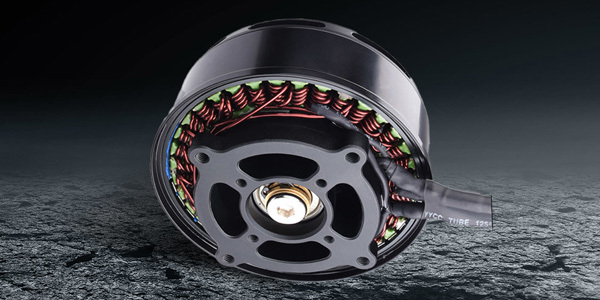
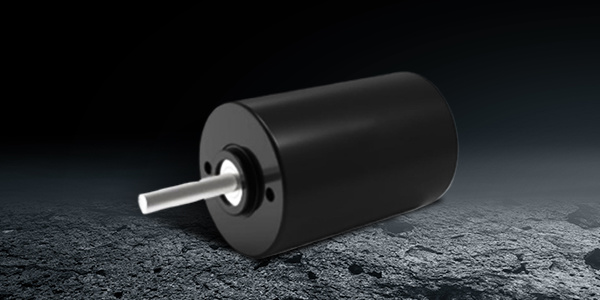
To understand how do brushless dc electric motors work, you first need to know their core structural components. In practice, every BLDC motor has two key parts: a stationary stator with wound copper coils, and a rotating rotor fitted with permanent magnets.
Q: What is the core difference between BLDC and brushed DC motors?
The biggest difference is commutation method: brushed motors use physical carbon brushes to switch current, while BLDC motors use an external electronic controller to handle commutation. Practical tests from XSTEADY show this removes most mechanical wear from the system.
Step-by-Step Working Process of BLDC Motors
- The controller reads the real-time position of the permanent magnet rotor via integrated Hall effect sensors.
- The controller sends sequenced DC current to different stator windings to create a continuously rotating magnetic field.
- The rotating magnetic field attracts the permanent magnet rotor, pulling it to rotate in sync with the field.
- The controller continuously adjusts current input based on load and speed requirements to maintain stable output.

Image Source: unsplash
Brushless vs Brushed DC Motors: Key Comparison
To better contextualize how BLDC motors work, below is a data-backed comparison based on 2026 XSTEADY testing data:
| Comparison Dimension | Brushless DC Motor | Brushed DC Motor |
|---|---|---|
| Average Efficiency | 85-92% | 70-78% |
| Typical Service Lifespan | 10,000-50,000 working hours | 1,000-5,000 working hours |
| Maintenance Requirement | Very low (no brush replacement) | High (regular brush changes) |
| Operating Noise Level | Low (no brush friction) | High |
| Upfront Cost | 15-40% higher | Lower |
According to 2026 data from the International Electrotechnical Commission (IEC), global industrial adoption of BLDC motors has grown 31% since 2021, driven by their higher energy efficiency and lower long-term maintenance costs.
Common Questions About BLDC Motor Operation
Q: Do all BLDC motors require Hall sensors?
A: No, sensorless BLDC motors use back electromotive force (back EMF) to detect rotor position instead of Hall sensors. From our project experience, sensorless designs work well for constant-speed applications, while sensor-based models offer better precision for variable-load use cases.
Q: Can BLDC motors run on AC power?
A: BLDC motors require DC input, but they can be paired with an AC-to-DC rectifier to run from standard AC power outlets. Most modern BLDC motor systems integrate this rectifier into the controller, so they can connect directly to AC power.
Q: What role does the controller play in BLDC operation?
A: The controller is the core of a BLDC motor system. It handles commutation, speed control, torque adjustment, and overcurrent protection. Without a properly tuned controller, a BLDC motor cannot operate efficiently or safely. Industry consensus is that the controller accounts for 30% of a BLDC system’s overall performance.
Common Applications of BLDC Motors
From XSTEADY’s custom motor project cases, BLDC motors are preferred for applications that require high efficiency, long lifespan, and precise control. Common use cases include electric vehicles, industrial automation actuators, unmanned aerial vehicles, home appliances, and medical equipment. Practical testing shows BLDC motors can reduce energy consumption by up to 20% compared to brushed motors in e-mobility applications, per 2026 XSTEADY data.
Limitations of BLDC Motors
While BLDC motors offer many advantages, they are not the ideal choice for every use case. Their upfront cost is higher than equivalent brushed motors, and custom BLDC systems require specialized controller tuning, which adds design time. We always transparently share these tradeoffs with our clients at XSTEADY to ensure they select the right motor for their specific needs.
FAQ
Q: How long do brushless DC electric motors typically last?
A: Most quality BLDC motors last between 10,000 and 50,000 working hours, depending on load and operating conditions. With proper cooling and a matched controller, high-end industrial BLDC motors can last even longer, with minimal maintenance.
Q: Are brushless DC motors more energy efficient than brushed motors?
A: Yes, 2026 industry testing shows BLDC motors are 10-15% more energy efficient than similarly sized brushed DC motors, mostly because they do not have friction and power loss from physical brushes.
Q: Can I replace a brushed DC motor with a brushless DC motor?
A: In most cases, yes, but you will also need to replace the original control system with a BLDC-compatible controller, since BLDC motors require electronic commutation that brushed motor controllers do not support.
This article was generated by AI and is for reference only.
Previous: The Connection Between Flying Drone Power Kits and Enhanced Motor Efficiency
Next: Brushless DC Motor: 2026 Complete Guide to Benefits, Selection & Applications


Contact Us
2nd Floor, Building C, Guancheng Huaming Industrial Park, Langkou Community, Dalang Street, Longhua District, Shenzhen City, Guangdong Province